
Criminal Defense · Jeff T. Gorman Law Offices

Federal Criminal Defense
A Former Federal Law Clerk
and DOJ Intern in Your Corner.

Federal charges require federal experience. Jeff Gorman clerked for U.S. District Court Judge Royce Lamberth in Washington, D.C., interned with the U.S. Department of Justice Narcotics and Dangerous Drugs Section, and practiced federal civil litigation for three years before entering criminal law. Jeff T. Gorman Law Offices is admitted to the U.S. District Court for the Southern District of Florida.
Federal Grand Jury Subpoena or Arrest — Call Before You Speak to Federal Agents
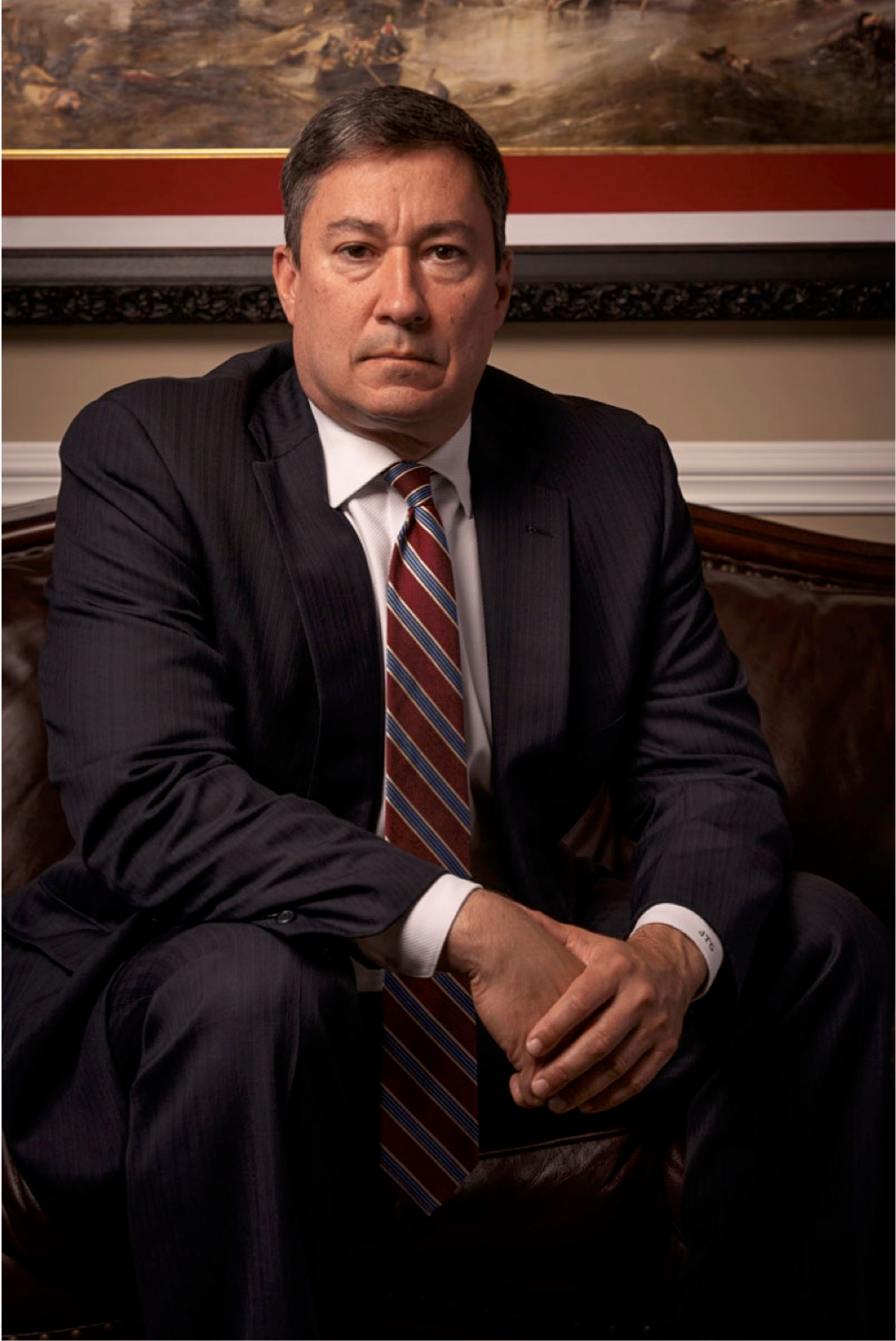
Jeff T. Gorman
Jeff T. Gorman
Founding Attorney · FL Bar #538183
100+
Felony Jury Trials
19th
Circuit Former Prosecutor
4.9★
Google Rating · 260+ Reviews
“I prosecuted more felony jury trials than any other attorney in the 19th Circuit. I know exactly how the State builds its case — and exactly how to take it apart.”
What the Federal Government Brings to Your Case
Months or years of pre-indictment investigation by FBI, DEA, IRS-CI, or other federal agencies before any arrest
Wiretap evidence, GPS surveillance, financial records, and electronic data gathered under federal court orders
Cooperating witnesses who have already agreed to testify in exchange for their own reduced sentences
U.S. Sentencing Guidelines that can produce multi-decade recommended sentences for non-violent offenses
Federal prosecutors who almost never bring charges without a case they believe they can win at trial

What the Evidence Shows —
and Where It Can Be Challenged

When federal agents want to talk to you — whether you’re the subject of an investigation, a witness called before a grand jury, or someone who has just been arrested — the rules are different and the stakes are typically higher. The federal conviction rate exceeds 90%. Cases that reach indictment are prosecuted with significant resources and extensive preparation.

Jeff Gorman’s federal background is genuine and specific. He clerked for U.S. District Court Judge Royce Lamberth in Washington, D.C. — sitting at the center of how federal criminal proceedings actually operate. He interned with the U.S. Department of Justice Narcotics and Dangerous Drugs Section. He practiced federal ERISA litigation for three years before law school. This is specific federal institutional knowledge — not general criminal defense experience applied to federal court.

⚖️ Federal Criminal Practice — Key Distinctions from State Court
Federal criminal practice differs from state practice in critical ways. Sentencing Guidelines: The USSG governs recommended sentencing ranges and accounts for relevant conduct — conduct you were not formally charged with. No Parole: Federal sentences are served at a minimum of 85%. A 10-year federal sentence is a 10-year sentence. Mandatory Minimums: Federal drug trafficking, firearms offenses, and certain other crimes carry mandatory minimums that cannot be reduced without a substantial assistance motion from the government. Grand Jury: Federal prosecutors present cases to a grand jury before indictment. A subpoena to appear before a grand jury is an early warning of investigation that demands immediate counsel.
18 U.S.C. (Federal Criminal Code) · Federal Rules of Criminal Procedure · U.S. Sentencing Guidelines Manual · U.S. District Court, Southern District of Florida

How We Fight This Charge

Pre-Indictment Intervention
The best time to influence a federal investigation is before charges are filed. We engage with federal prosecutors early to present exculpatory information and potentially prevent indictment entirely.
Guideline Calculation Challenges
The USSG offense level determines the recommended range. We scrutinize every enhancement, relevant conduct inclusion, and criminal history point for legal error or overstatement.
Suppression in Federal Court
The 4th, 5th, and 6th Amendments apply with full force in federal court. Improperly obtained evidence, coerced statements, and Sixth Amendment violations can be suppressed.
Cooperation Analysis
We analyze cooperation strategically — evaluating what information you have, what the government needs, and whether the risk-benefit calculation supports cooperation at all.
Constitutional Motions
Selective prosecution, vindictive prosecution, and due process challenges are viable in appropriate federal cases and can result in dismissal or significant concessions.
Sentencing Advocacy
When conviction occurs, advocacy under 18 U.S.C. §3553(a) can produce sentences below the guideline range based on individual circumstances and character.
Notable Results
NOT GUILTY
Federal Drug Charges · Jury Trial · Southern District of Florida
DISMISSED
Federal Charges · Pre-Indictment · Evidence Insufficient
BELOW GUIDELINES
Federal Sentencing · Downward Variance Granted · §3553(a)

Past results do not guarantee a similar outcome. Case details available upon request.

Common Questions

Federal Criminal Defense Attorney FAQ

How are federal criminal charges different from state charges? +
Federal cases are fundamentally different. Federal prosecutors investigate extensively before charging — the federal conviction rate exceeds 90%. Federal sentencing is governed by the U.S. Sentencing Guidelines, which are more rigid than state guidelines. Federal Bureau of Prisons sentences are served without parole. Federal courts operate under the Federal Rules of Criminal Procedure, which differ significantly from Florida state procedure.
What triggers federal rather than state prosecution for drug charges? +
Federal drug charges arise from multi-agency investigations by DEA, FBI, or Homeland Security; large-scale trafficking operations; offenses crossing state lines; or when federal authorities choose to take jurisdiction. Federal drug trafficking carries mandatory minimums that often exceed state minimums. Being charged federally means investigators have been building the case — often with wiretaps, cooperating witnesses, and financial analysis.
What are federal sentencing guidelines? +
The U.S. Sentencing Guidelines assign a base offense level to every federal crime, adjusted upward or downward for specific offense factors. Combined with the defendant's criminal history category, the guidelines produce a recommended sentencing range in months. Federal judges must consider the guidelines but are not strictly bound by them. Strategic work on the guideline calculation can significantly affect the recommended range.
Can federal charges be reduced through cooperation? +
Yes. Substantial assistance motions under U.S.S.G. §5K1.1 allow the government to move for a sentence below the mandatory minimum or guideline range based on a defendant's assistance in investigating or prosecuting others. Cooperation is a significant strategic decision that must be approached with experienced federal defense counsel — never impulsively or without full understanding of the obligations and risks.
Free Consultation · 24/7

Federal Investigation or Charges?
You Need Federal Experience.
We Have It.

Former federal judicial clerk. Former DOJ intern. Admitted to U.S. District Court, Southern District of Florida. Call (772) 888-8888 before you speak to federal agents — anything you say can and will be used in a federal prosecution.

Free initial consultation does not create an attorney-client relationship. Past results do not guarantee a similar outcome. Florida Bar Rules 4-7.1 through 4-7.20 apply.